Emergency Pedagogy
Emergency Pedagogy (Notfallpädagogik) is a pedagogical first-aid approach that supports children after traumatic experiences such as accidents, loss, violence, neglect, war, displacement or natural disasters. It equips educators, therapists and social workers with knowledge and practical skills to offer “first aid for the soul.” Its aim is not psychotherapy, but early pedagogical intervention that stabilises, protects and activates the child’s self-healing capacities, ideally within days to a few weeks after the event, so that acute distress is less likely to develop into a longer-term trauma-related disorder.
The approach views the child as a whole being. Trauma affects body, senses, daily rhythms, relationships and the sense of meaning. Emergency Pedagogy therefore works with the whole child, creating environments of safety and using resource-oriented methods that restore agency rather than pathologise behaviour. It emphasises calm adult presence, reliable relationships and practical techniques that help children regulate, reconnect and gradually process overwhelming experiences.
Developed by Bernd Ruf and the Friends of Waldorf Education (now operating internationally as Emergency Pedagogy Without Borders), the method has been applied since 2006 in crisis interventions and everyday educational settings. Core practical competencies include:
- Understanding trauma phases and pedagogical timing, distinguishing acute shock, early post-traumatic reactions and later stages, then applying age- and phase-appropriate interventions (secondary prevention focus).
- Creating physical and relational safety through calm, predictable, aesthetically cared-for spaces, consistent adult presence and protective boundaries.
- Restoring rhythm and ritual via structured daily routines, regular mealtimes and sleep patterns, and morning/evening rituals that re-anchor a sense of time and security.
- Supporting artistic and sensory expression (watercolour painting, form drawing, modelling, music, singing, storytelling) so feelings can be externalised when words are unavailable.
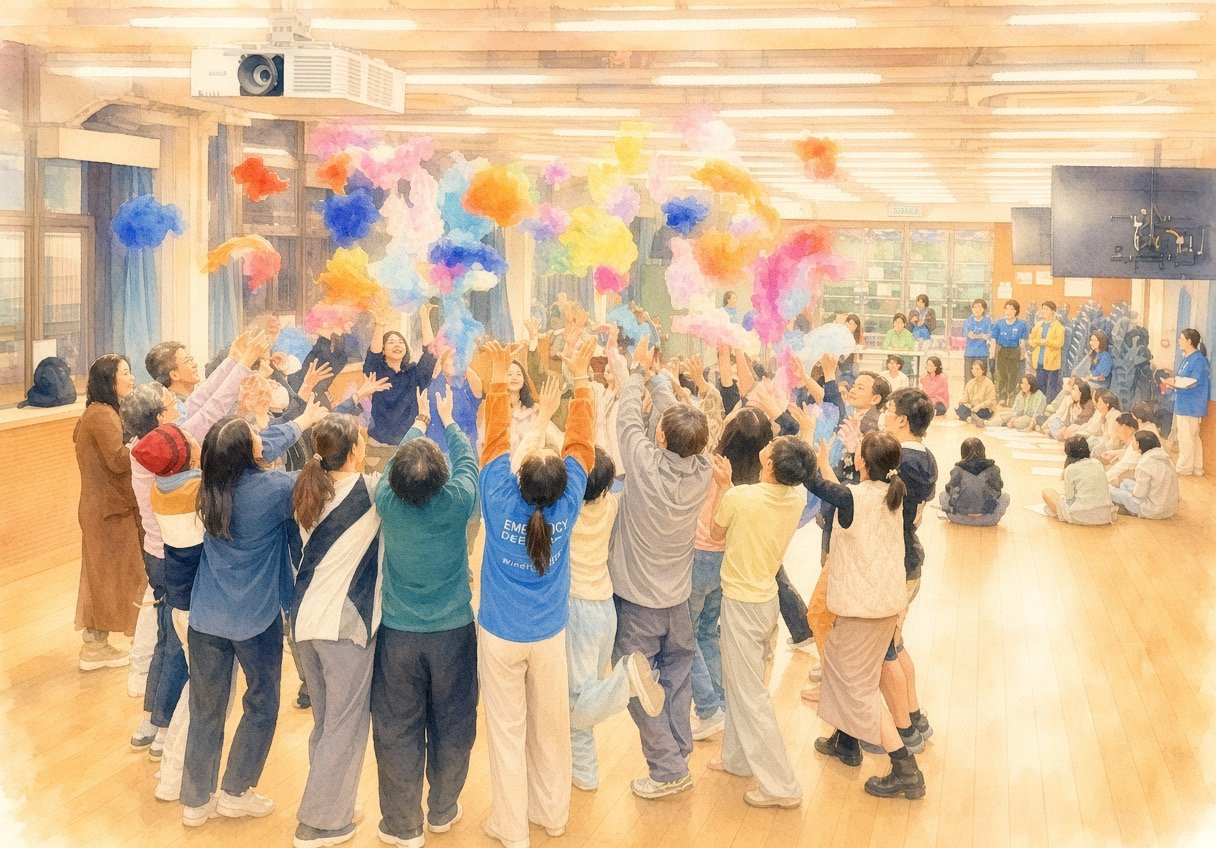
- Using movement, body awareness and sensory integration activities (circle and movement games, eurythmy or Bothmer-inspired exercises, clapping and string games, balance work, gentle body-geography or rhythmic embrocation) to release trauma-related contraction and restore embodied self-connection.
- Rebuilding agency, social connection and hope through experiences of success (handwork, practical projects, circus skills), cooperative games and forward-looking activities.
- Maintaining educator self-care and a professional stance of personal stability, clear limits, collaboration with local organisations, and a non-confrontational, hope-oriented attitude (“pedagogy is love”).
The approach draws on Waldorf educational methods and anthroposophical anthropology while integrating insights from psychotraumatology. It is explicitly distinguished from clinical trauma therapy: its goal is early pedagogical stabilisation so that deeper therapeutic work, if later needed, becomes less necessary or more effective. When professionals possess these competencies, difficult developmental trajectories can often be interrupted early and healthier paths supported, helping children regain a sense of safety, connection and the possibility of recovery.
Emergency Pedagogy works primarily through four practical methods that help traumatised children regain stability and inner strength.
Safe places form the foundation. A protected physical, emotional and social environment of warmth, predictability and reliable relationships allows the nervous system to settle and trust to return.
Rhythm restores order. Daily, weekly and seasonal rhythms — regular mealtimes, rituals, breathing and structured activities — counteract the chaos of trauma and rebuild a sense of continuity.
Movement reconnects body and soul. Through eurythmy, games, walks, gymnastics and free play, children release tension, regain orientation in space and experience themselves as capable and alive.
Art opens creative pathways. Painting, drawing, modelling, music and storytelling offer non-verbal ways to express and transform overwhelming experiences, fostering joy, meaning and post-traumatic growth.
Emergency Pedagogy and Waldorf Education
Emergency Pedagogy is deeply rooted in the educational philosophy and anthropology of Waldorf education. At its centre stands a holistic understanding of the human being as a bio-psycho-social-spiritual unity. Trauma is therefore never viewed as a purely psychological event; it affects the body, the senses, developmental rhythms, relationships and the child’s sense of meaning and orientation in the world.
Waldorf education, founded on the insights of Rudolf Steiner, places strong emphasis on age-appropriate development, the cultivation of the senses, the importance of rhythm, and the nurturing of the child’s inherent forces of growth and healing. These same principles guide Emergency Pedagogy. When a child has been overwhelmed by traumatic events, the pedagogical task is not only to stabilise but also to support “post-maturation” processes — gently restoring developmental steps that may have been interrupted.
Practical methods drawn from Waldorf pedagogy — such as eurythmy, storytelling with healing images, artistic activities, rhythm care and carefully designed sensory experiences — form an integral part of emergency pedagogical work. They help create “safe places” on physical, temporal, relational and spiritual levels, enabling the child to regain a sense of safety, agency and connection.
In this way, Emergency Pedagogy extends the core intentions of Waldorf education into the realm of crisis and trauma: to meet the whole child with warmth, understanding and practical support that awakens the inner forces of recovery and growth.